

During the preanalytical phase of blood gas analysis, haemolysis in blood samples can occur if you mix too vigorously. [1]
An example of a haemolysed blood sample:
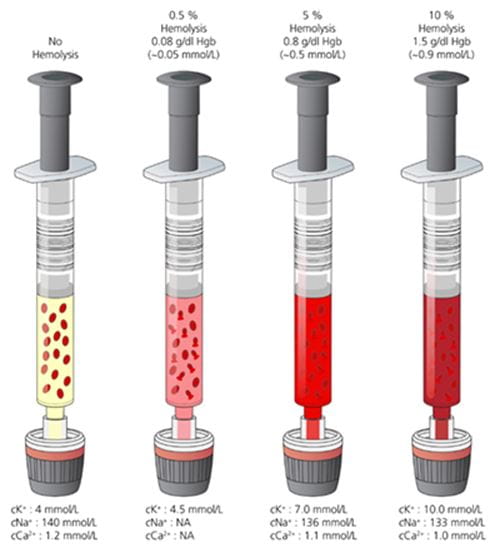
Vigorous mixing leads to haemolysis in blood gas samples. In a haemolysed sample erythrocytes rupture and components from inside the cell(s) are released into the plasma. One of these components is potassium (K⁺). [1]
Outcome of haemolysis in blood samples
Haemolysis in blood gas samples leads to erroneous increased potassium values and to other inaccurate values, such as a decrease of pH, pCO₂ and pO₂. [2]
Reduce the risk of haemolysis in blood gas samples
Manual mixing:
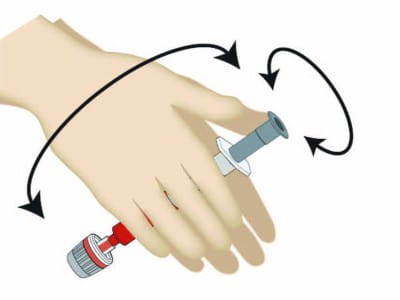
The suggested technique for mixing involves a repeated and gentle inversion of the syringe while rolling it between your palms. [2]
However, you can also use the automatic mixing feature in your blood gas analyser to obtain a homogenous sample while minimising the risk of haemolysis from occurring. [3]
Minimise haemolysis in blood samples with automatic mixing
You need to mix a sample sufficiently in order to obtain a homogeneous sample to get accurate results. However, the technique of manual mixing is applied inconsistently. [4]
Your solution to reducing haemolysis in blood samples lies in automatic mixing.
At Radiometer, we designed the safePICO blood gas syringe to help you adequately mix your sample. The syringe is designed to help reduce the risk of haemolysis in blood samples.
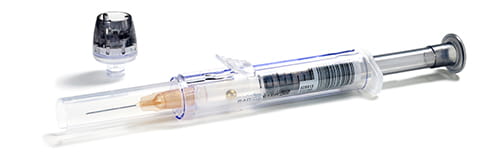
Prior to analysis, sufficient mixing is crucial to obtain a homogeneous sample. The safePICO syringe and automatic mixing on a blood gas analyser helps you produce a homogeneous sample, while reducing the risk of haemolysis from occurring. [3]
The safePICO syringe helps you reduce the risk of other preanalytical errors. In addition to haemolysis, examples of such errors are clots or an air bubble in the sample, needlestick injuries or patient-sample mix-up.