“One case of serious infection by blood-borne pathogens can add up to $1 million or more in expenses for testing, lost work time and disability payments.” [1]
Causes of needlestick injury
Many factors may cause needlestick injury. The unavailability of sampling safety devices for operators or the lack of a dedicated procedure for operator safety can lead to needlestick injuries. [2]
Risks of needlestick injury
Needlestick injury may lead to safety concerns or infection by blood-borne pathogens. [2]
Healthcare professionals are at risk of being exposed to blood-borne pathogens through coming into contact with blood. Such contact can be a result of inoculation of blood by a needle. [3]
Minimise needlestick injury with a needleshield device
A needleshield works in accordance with the EU directive 2010/32/EU for the prevention of sharp injuries within hospitals. First published in May 2010, the directive calls for increased operator safety when handling blood collection devices, including arterial blood gas syringes. [4]
Sharps need to be disposed safely and immediately into appropriate, puncture-proof bins to protect you from blood-borne pathogens.
To protect healthcare professionals from accidental needlestick injuries, the Clinical and Laboratory Standards Institute (CLSI) guidelines recommends the use of engineered sharps injury protection. [5]
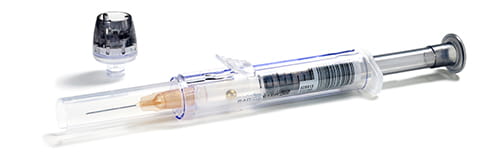
A syringe should include a safety feature, which can be detached from the syringe barrel. The needle protection mechanism is activated after sample collection, protecting the user from exposure to the needle. [1]
The safePICO arterial blood gas syringe with needleshield device
The safePICO syringe contains a needleshield device that is securely locked and operated with one hand. After activating the needleshield, you dispose the needle securely and minimise the risk of needlestick injury.